- The subject matter of ecclesiastical museums is part of the conversation on the preservation of the Church’s ecclesiastical patrimony, efforts of the Church in fostering new evangelisation and the pastoral necessity of sacred art. While the ultimate goal of evangelisation is salus animarum (salvation of souls), each generation is tasked with seeking ways to better communicate the gospel in its own age and context. Christianity is tasked with announcing the gospel in the “hic et nunc” (here and now); hence, the Church, through the use of different cultures, seeks to find ways in which God is communicated through means that are communicable and appreciable. The document of Vatican II, Gaudium et Spes, states that God revealed Himself to His people to the extent of His full manifestation in His incarnate Son, according to the culture proper to each epoch. Likewise, the Church, living in various circumstances over time, has used discoveries of different cultures to spread the gospel that they might understand (Gaudium et Spes, #58). The idea of culture does not run contrary to the gospel ideals; instead, each generation must seek how to use the culture of its day to communicate the gospel. This idea underscores the necessity of identifying in one’s culture those things that are essential and convey the message of Christ.
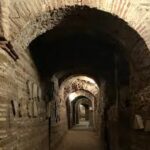
- Similarly, faith presents itself in artistic forms, and these are also historical witnesses of the gospel. It is the witness of Christian arts preserved over the ages that illuminates our mind today about what the Christian past is, and has equally helped in the formation of Christian doctrines and beliefs. As early as the 2nd Century, Christian art began to develop, especially as evident in the wall and ceiling paintings in the Roman catacombs —the subterranean burial sites of Christians. Some of the paintings, frescoes and carvings served as visual sermons to the largely illiterate Christian converts. During the Roman persecution of Christians in the first and second centuries, Christian art and symbolism were used to communicate the gospel message and beliefs without openly defying Roman authorities. Hence, Christian arts in the catacombs, which were also places of worship, were both tools of catechesis, doctrinal pointers and tools for doctrinal formation. The doctrine of the resurrection was a concept that gained more meaning and developed among early Christians who had come from pagan cultures, who hitherto did not believe in the resurrection, with such images. For instance, in the catacomb of St. Callixtus, the image of Jonah being swallowed by the whale and emerging three days later was an early Christian motif that prefigured the image of Jesus’ death, burial and resurrection. Sacred arts are, therefore, cultural treasures for promoting evangelisation.
- Museums are repositories for the conservation of the Church’s tradition, preserving continuity with past generations and fostering a sensum ecclesiae (sense of the Church). An ecclesiastical museum documents human genius, while also offering insights into the religious and cultural life of a people’s past, and provides meaning and direction for their present and future. (Cf. The Pontifical Commission for the Cultural Heritage of the Church, Circular Letter, “The Pastoral Function of Ecclesiastical Museums”, 2001). Ecclesiastical museums are repositories of dialogue between culture and faith. Church museums are repositories of art-historical heritage. Every church should have a place where items, arts, and works related to the evolution of the gospel in that culture are displayed, along with brief descriptions of what those items represent. In a parish setting or an ecclesiastical institution, it could be like a gallery which helps to tell the faith journey through items of encounter. It could also hold the photographs of all the pastors who have worked in the particular parish to date. In another instance, for example, if a group of people were converted from pagan worship and had served other gods, it would be beneficial to preserve some of the elements they worshipped before encountering the supreme God. It would be a pastoral disservice and cultural annihilation to burn them entirely in the name of conversion. Some of those items should be preserved to show future generations what the people were freed from. Let us imagine that some of those items were believed to be possessed by evil powers or were contaminated. By the act of evangelisation and the supreme power of God that purifies and makes whole, such items would have been demystified and stripped of their potency. In which case, they could therefore be preserved.
- Ecclesiastical museums are places to store and protect what is no longer in use within a parish or ecclesiastical institution, or what can be recalled for reuse in the future. The museum is a repository for culture and treasures. In a parish setting, some artworks, church carvings, vessels, vestments and liturgical artefacts that may be older because newer ones have been acquired can be preserved in the ecclesiastical museum. They could be stored neatly and arranged along with descriptions of their significance. For instance, the first presider’s chair or cathedra in a parish may have been replaced, but holds great memory because of who first used it or who has used it. It may be preserved due to its association with the history of the Church and its relevance to the people. Additionally, church museums serve as repositories for the intersection between culture and evangelisation. Some of the efforts at inculturation are lost because of the lack of preservation of items, which generally have been purified and transformed or which are pointers to higher realities. Ecclesiastical museums help to foster interreligious dialogue.
- Cultural treasures that have an impact on faith also comprise specific treasures of a Christian community. These cultural treasures are equally kept in the church museums. Museums help to restore a dying ecclesiastical tradition of safekeeping in a modern world of throwaway culture. The term “throwaway culture” refers to the social trend of discarding goods after minimal use, often as a result of consumerism, low-cost manufacturing, and an emphasis on novelty. This is the culture that makes one quickly reduce things to rubbish (Pope Francis, Laudato Si, #22). This negative culture pervades many aspects of our lives, including our responses to the temporal goods of the church. Hence, museums help us preserve items that may not be in current use but hold great significance for faith or tradition. It is some of these cultural treasures that have been preserved, which are sources of great value and are even given as mementoes during visits by Popes or other high-ranking ecclesiastical figures. In 2016, when Pope Francis visited Poland for the World Youth Day, he was presented with the image of the Black Madonna of Czestochowa, also known as Our Lady of Jasna Gora, from their ecclesiastical reliquary. This image holds a strong cultural and spiritual significance for the Poles as a symbol of their resistance and strength during the communist era. Another image that comes to mind is the Pachamama controversy during the Amazon Synod in October 2019, when Pope Francis was presented with the image of an earth goddess venerated in the indigenous cultures of the Andes, particularly in countries such as Peru, Bolivia, and Ecuador. While this latter image sparked criticism as inappropriate because it was brought to Christian worship, it, however, showed how their pre-Christian religious symbol for the people had been preserved. In sum, ecclesiastical museums play a role in safeguarding these religious arts and symbols for pastoral communication, aesthetic and historical education, catechesis, the safeguard of memory, inculturation, and ultimately, the preservation of the religious origin and identity of a people.